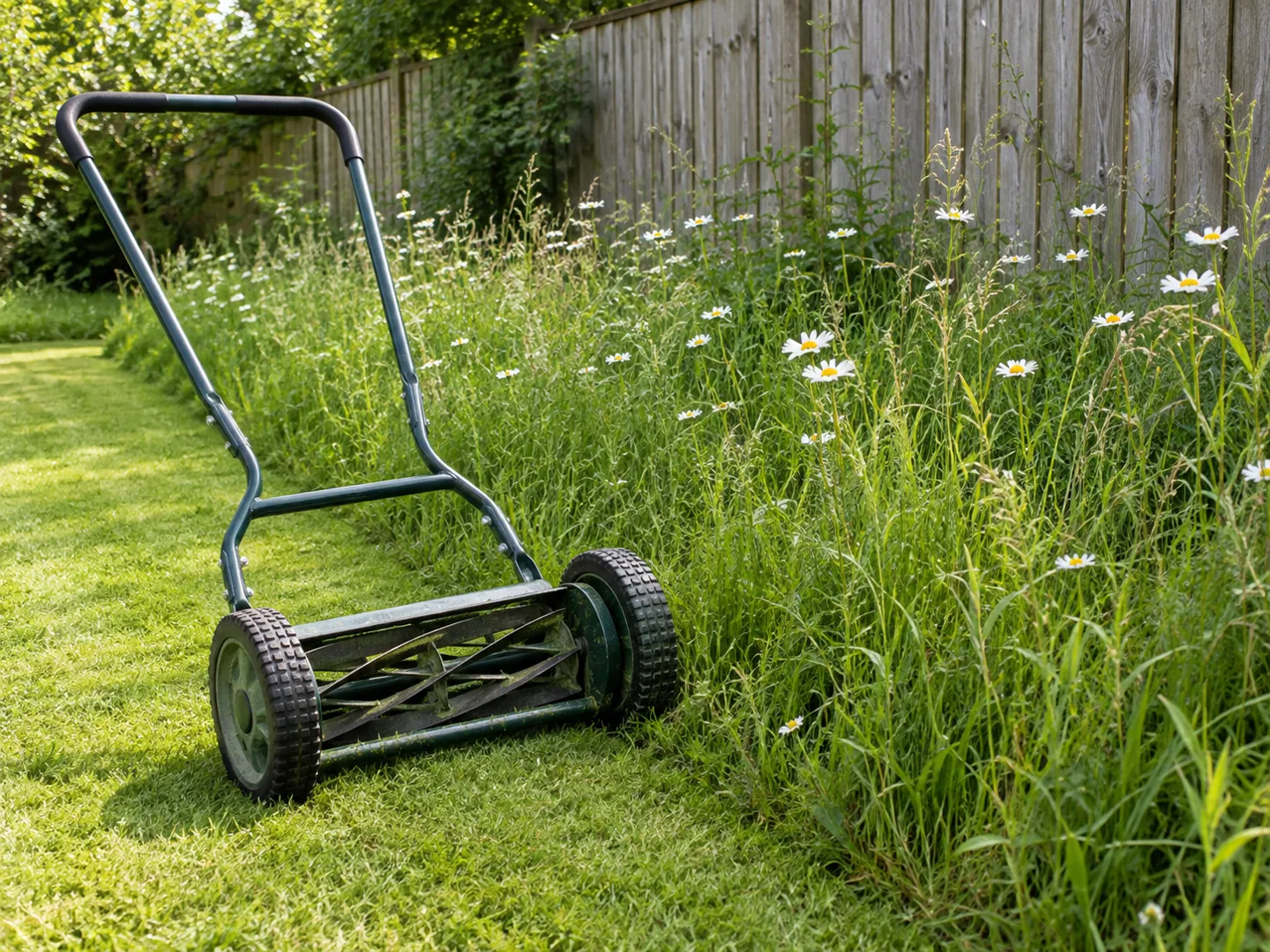
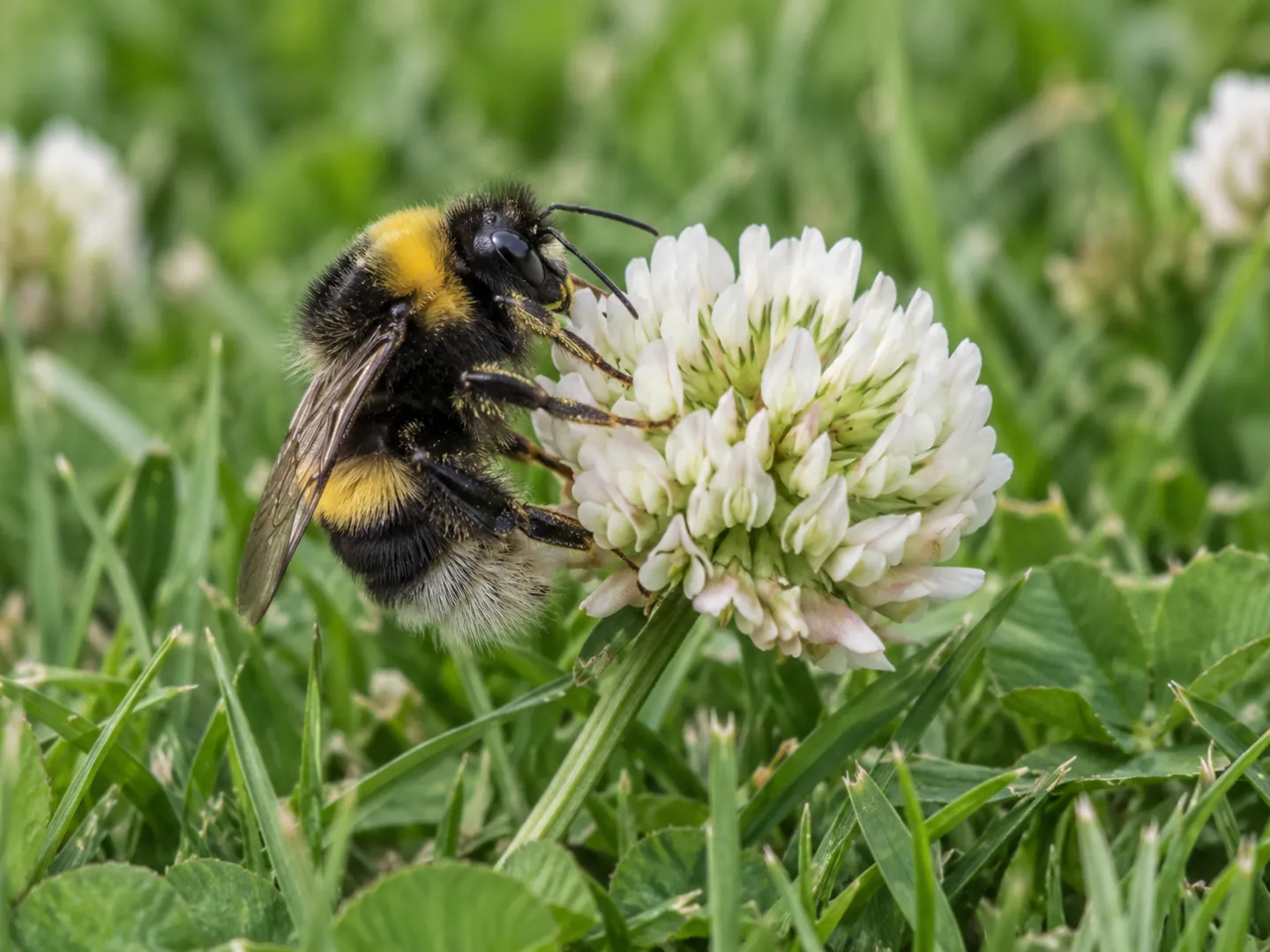
A lawn cut every week stays neat but rarely blooms. Plantlife, the RHS and a field study of suburban lawns all point the same way: mow less often, and leave more than one length of grass.
Pick the way you mow most of the summer. The bar shows how much room it leaves for lawn flowers, going by Plantlife, RHS and research guidance.
Based on Plantlife's No Mow May guidance, the RHS lawn mowing guide and Lerman and colleagues (2018). Every lawn and soil is different.
TWO NUMBERS WORTH KNOWING
Lawns can fill a meadow-sized gap.
One figure on what mowing less does, one on how much flower-rich grassland has gone.
2.5× more
More lawn flowers when mowed every three weeks
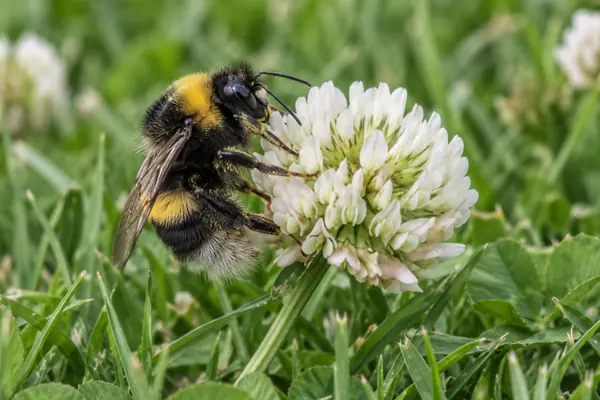
Researchers mowed 16 suburban yards in western Massachusetts every one, two or three weeks. Three-weekly lawns had as much as 2.5 times more lawn flowers, a 'lazy lawnmower' approach to bee habitat.
MOWING STUDY · BIOLOGICAL CONSERVATION
≈ 97%
Flower-rich meadows lost since the 1930s
Plantlife says approximately 97% of flower-rich meadows have been lost since the 1930s, and with them food and habitat for wildlife. It counts more than 20 million gardens in the UK.
LOST MEADOWS · PLANTLIFE
Plantlife launched No Mow May in 2018. Its aim, in its own words, is to get people cutting less, for longer.
FOUR STEPS TO TRY
A wilder lawn, still a usable one.
None of these needs new kit. They are about when, how short and where you cut.
Skip May
Stop mowing in early May, all of the lawn or just a section. The RHS says it is even better to leave it until August.
Raise the blades
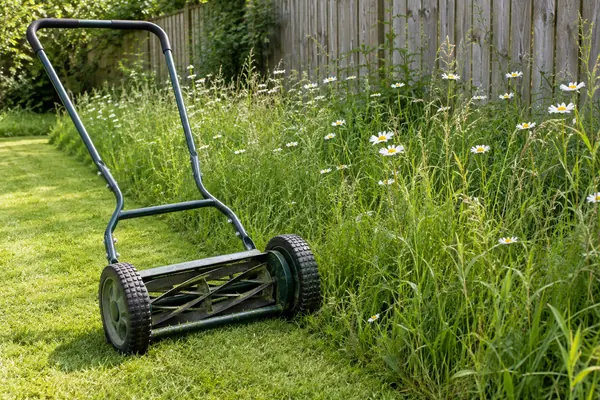
Never take off more than a third of the grass height. A higher cut also lets smaller wildflowers thrive, the RHS says.
Keep a mow-saic
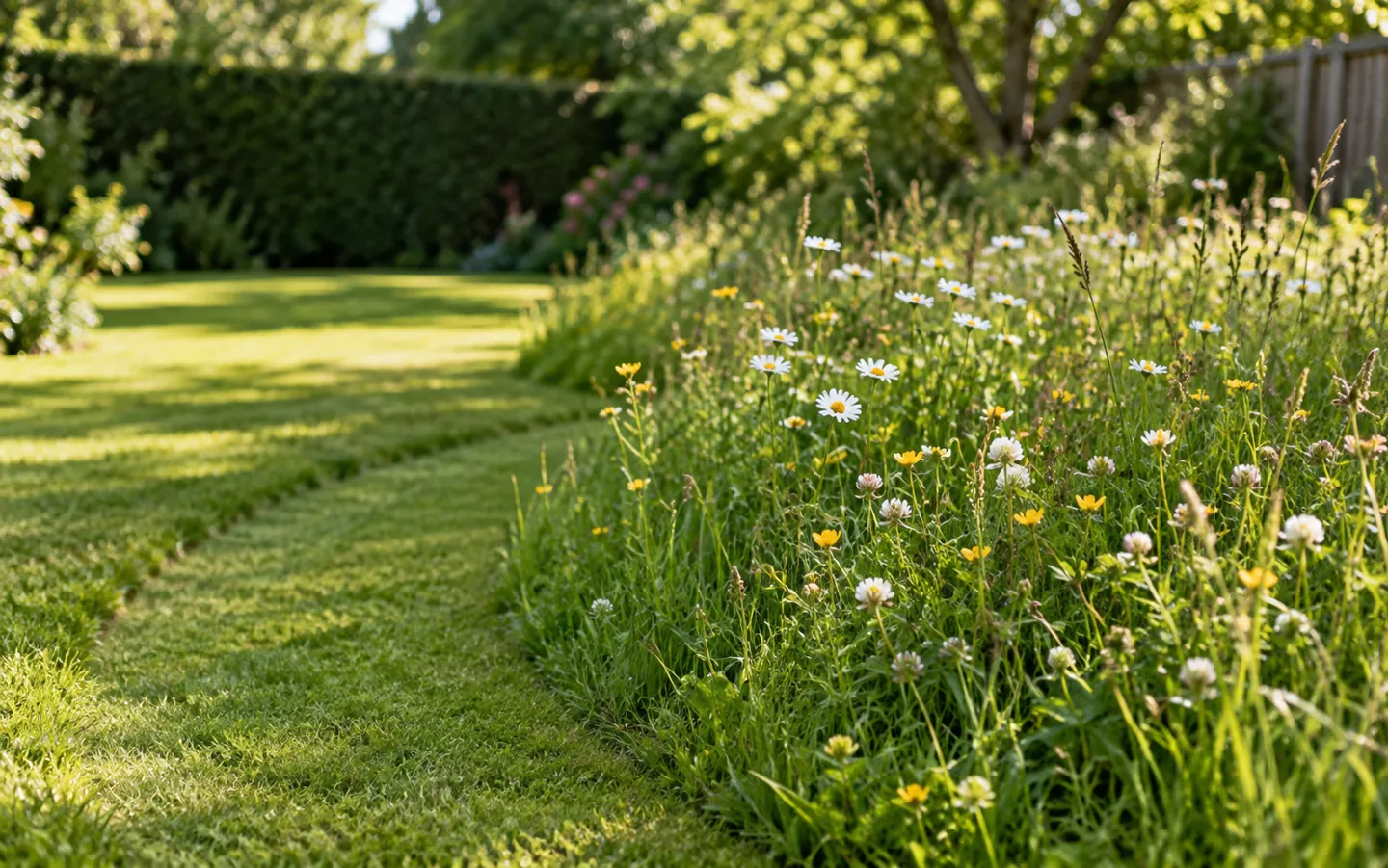
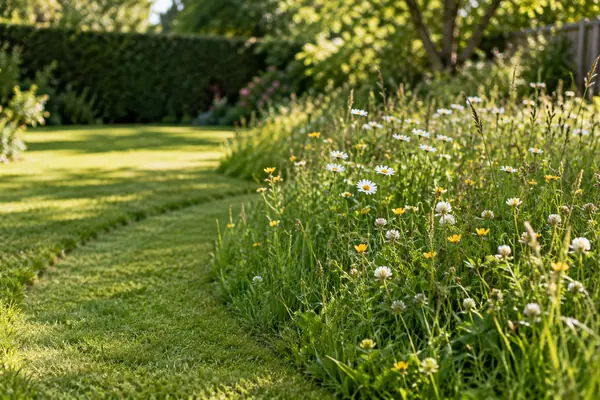
Keep a short area cut monthly, a meadow area cut 2 to 3 times a year outside April to August, and a patch left long.
Take the cuttings away
Plantlife advises removing grass cuttings so nutrients do not build up, which can hold back many wild plants.
AI-generated image, not a photograph of a real person or place.AI-generated image, not a photograph of a real person or place.
MOWING LONG GRASS
Check first, cut towards safety.
Before cutting long grass, Plantlife says to check it for wildlife and never to mow from the edges towards the centre, which leaves animals no escape. Work gradually towards uncut strips instead.
Set the blades as high as possible and cut strips half the mower's width, then go over again lower. The RHS advises checking long grass for hedgehogs before strimming and wearing sturdy footwear when mowing.
Questions
Questions people ask
How often should I mow for wildlife?
Plantlife suggests mowing short areas about once a month to 1 to 2 inches, and leaving other areas longer. The RHS says flower-rich lawns can be mown every four to six weeks in summer.
What is No Mow May?
Plantlife's annual campaign, launched in 2018, asking people to stop mowing all or part of their lawn from May so wildflowers can grow and feed pollinators.
Will a longer lawn look untidy?
Plantlife recommends a 'mow-saic' of 2 to 3 lengths, so you can keep short paths and areas for use while longer patches flower. The RHS notes lawns always left too long can become weak for sport and foot traffic.
What height should I cut my lawn?
The RHS suggests 13 to 25 mm in summer and up to 40 mm in spring and autumn for ordinary lawns, and never removing more than a third of the height at once.
What about ticks in long grass?
Plantlife says ticks in gardens are increasing. It advises long trousers, checking yourself after being in long grass, and, where ticks are common, a shorter lawn mown once every four weeks.